Standard 1: Elementary teachers have a broad knowledge and understanding of the major concepts in English Language Arts and Literacy. 


As an elementary teacher, you are given the opportunity to fully integrate your classroom.  This means that English Language Arts and Literacy are not stand alone subjects.  Every subject requires reading and most tasks in life require that your students be strong readers.  As a teacher, I model my own love for reading by displaying my own personal books and by sharing my enthusiasm about literature with my students.  I also encourage them to share with me their favorite books and reading experiences.  I am a resource teacher to my students so, in my classroom we spend time reading books together and discussing them as a group.  I organize our time together like a literature circle and we discuss vocabulary, plot, characters, figurative language, and much more.  Because my students are all strong readers, I focus on helping my students dig deeper.  Throughout my studies while pursuing my masters, I have learned much about the best practices in comprehensive literacy.  Comprehensive literacy is literacy instruction that encompasses all of the following components:  shared reading, reading aloud, guided reading, writers workshop, and word work. The Balanced Literacy Portfolio below shows intensive research and reflections that I have completed on each of these topics.   


Balanced Literacy Portfolio.doc Balanced Literacy Portfolio.doc
Size : 4512.5 Kb
Type : doc
Portfolio Artifacts.doc Portfolio Artifacts.doc
Size : 107 Kb
Type : doc

As an educator, I also realize that reading can be very important to personal and social growth.   Books can allow students to travel to places they may never experience first-hand, can teach them about history or science, or answer questions, or help them make connections.  Students can also identify and bond with characters.  These characters can influence their life in many meaningful ways.  Working with gifted students, I know that they can sometimes feel out of place with their peers.  Knowing this, I created a blog which discusses books that have gifted main characters and can be used as bibliotherapy.  Bibliotherapy is a type of therapy that uses books to solve social or emotional problems;  often times knowing that they are not the only one who has felt out of place allows gifted students to know they are not alone.

Some of My Best Friends are Books.

"So Matilda's strong young mind continued to grow, nurtured by the voices of all those authors who had sent their books out into the world like ships on the sea. These books gave Matilda a hopeful and comforting message: You are not alone." - Roald Dahl (Matilda) Gifted Text Set: Biography: Picture Book-Starry Messenger Chapter Book- Boy Informational Text: Picture Book-The Magic School Bus Chapter Book- The Gifted Kids' Survival Guide Poetry: Picture Book-FEG: Ridiculous Stupid Poems for Intelligent Children Chapter Book- Love That Dog Historical Fiction: Picture Book- John, Paul, George, & Ben Chapter Book- Johnny Tremaine Contemporary Fiction: Picture Book- Wemberly Worried Chapter Book-The Report Card Fantasy: Picture Book- A Bad Case of Stripes Chapter Book-A Wrinkle in Time Traditional Literature: Picture Book-The Tales of Uncle Remus: The Adventures of Brer Rabbit Chapter Book- Ella Enchanted

Biography- Starry Messenger

APA Citation:  Sis, P. (1996). Starry messenger: Galileo galilei. Berryville, VA: Berryville Graphics.

Genre: Biography

Format: Picture Book

Grade Level: K-5

Starry Messenger discusses Galileo Galilei and the many contributions that he made to the world.  Through the story of Galileo’s life and contributions, students learn about courage and standing up for your convictions.  This book is exceptional because it incorporates many of Galileo’s own words into the book and pictures. 

I chose this book because Galileo is an excellent historical figure for gifted students to learn about.  Galileo was exiled from his home because of his beliefs about the solar system, but he never gave up on his convictions because he knew that he was right.  It is important for gifted students to see examples of people standing up for what they believe is right and more importantly believing in themselves even if it makes them unpopular. Often times gifted students have different viewpoints and concerns than their peers because they are intellectually advanced, it is important for them to understand that they do not need to alter their viewpoints and opinions to satisfy the status quo.

At the beginning of the book Starry Messenger, there is a timeline with several names.  The names are: Eudoxus, Aristotle, Ptolemy, Aristarchus, Archimedes, and Copernicus. Students could work in groups to discovery who each of these men are, why they are important, and how they are like Galileo.
Posted 717 weeks ago

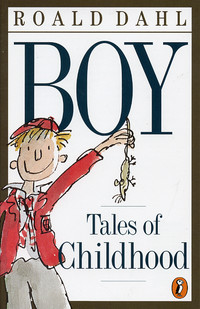
Biography-Boy

APA Citation:  Dahl, R. (1984). Boy. New York, NY: The Penguin Group.

Genre: Autobiography

Format: Chapter Book

Grade Level: 6-8

Boy tells the story of Roald’s Dahl  childhood.  He begins by giving the background on his parents and then chronicles his life all the way through high school graduation and landing his first job with Shell Oil.  His stories about childhood are very entertaining and paint a very vivid picture of how different life was when he was a child and how life is today.  Dahl shares many stories that offer insight on where the ideas for many of his books were born.  The follow up to this novel, Going Solo, is also a great read, but is more suited for high school students. 

I chose to include this book in my text set because Roald Dahl writes many books that deal with gifted main characters such as Matilda in Matilda, Sophie in the BFG, and even George in George’s Marvelous Medicine.  Gifted students would get great joy out of reading his biography and learning that the characters he wrote about were based on real people and real experiences.  Roald Dahl, himself, was quite gifted and talented and serves a good role model for students.

I would use this book as a read aloud with my students and in literature circles I would choose different Roald Dahl books for my students to read.  I would have them brainstorm what events in his life inspired him to write the novel they are reading.  I would also have them share what makes his books similar to one another.

Posted 717 weeks ago

Informational Text-The Magic School Bus

APA Citation:  Cole, J. (1992). The magic school bus. New York, NY: Scholastic Inc.

Genre: Informational Text/Fiction

Format: Picture Book

Grade Level: K-3

The Magic School Bus is a series that blends informational text and fiction together to create wacky science adventures.  The series focuses on Ms. Frizzle and her class who board a magic school bus for some very hands on science experiences.  The group travels to the solar system, takes a trip inside the human body, and experiences life undersea, just to name a few.  The books always end with a page that helps the reader to determine which parts of the story are scientific facts and which parts of the story are fiction.

This is an excellent series for gifted students because it makes science cool.  Many gifted students shy away from being excited about or interested in science because it is part of the stereotype of intellectually gifted students.  They are afraid that if they show too much interest in science they will be considered “nerds” or “geeks."  Magic School Bus is appealing to all students, but it sends a very positive message to gifted students that anyone and everyone can be interested in science because of the diverse characters that make up Ms. Frizzle’s class.

These are excellent books to use for integrating subjects.  I would pick a Magic School Bus book that pertains to the science topic we were covering that week and have students write down three things they learned and one thing that they would like to learn more about.  We would then share these as a whole group and then I would form small groups for guided reading based off of the topic that students wanted to learn more about. We would then read books in small group that pertains to the topic they were interested in learning about.

Posted 717 weeks ago

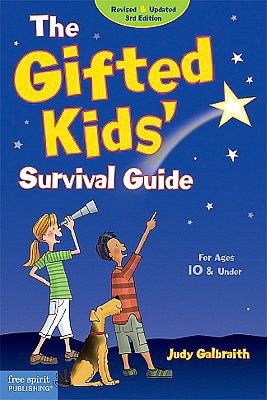
Informational Text- The Gifted Kids' Surivial Guide for Ages 10 & Under

APA Citation: Galbraith, J. (2009). The gifted kids’ survival guide. Minneapolis, MN: Free Spirit Publishing.

Genre: Informational Text

Format: Chapter Book

Grade Level: 4-5

This book was written to help gifted students understand what it means to be gifted and what the gifted label means for them.  Galbraith emphasizes that not all individuals are talented and gifted in the same way and that it varies from person to person.  The book also has a section where former gifted students speak about their experiences, This aspect is very beneficial to gifted students currently going through the program.  Galbraith also emphasizes to the reader that each gifted child is responsible for cultivating their intelligence in order to reach their highest potential in life. 

I included this text in my set because I am a new AIG specialist this year and I have found that many of my students do not fully understand what it means to gifted and what is expected of them in the gifted program.  I feel that this book would be very beneficial for students in helping them realize that giftedness has to be cultivated and is not a “gift” handed to them, as their label makes it sound.  It also helps them to realize that they are partly responsible for their learning and must not become lazy and contented to skate by in life.  They must work hard in order to meet their full potential.

I would use this in conjunction with an independent project on multiple intelligence.  I would have students take a multiple intelligence inventory test to find out their strengths, have them read this book, and then do a project on what they have learned about themselves as a learner.

Posted 717 weeks ago

Poetry-Love That Dog

APA Citation: Creech, S. (2001). Love that dog. New York, NY: HarperCollins.

Genre: Poetry

Format: Chapter Book

Grade Level: 6-8

Love that Dog is written in free verse and mimics the style of a child’s journal.  It tells the story of Jack, a boy who hates poetry, and thinks that it is only for girls.  Unfortunately for Jack, Mrs. Stretchberry does not agree that poetry is only for girls and continues to give her class poetry assignments.  She shares with them poems from many famous poets, one of which is Robert Frost, and the reader then see Jack’s response to the poem written in his poetry journal.  Jack eventually learns to appreciate poetry and learns to express himself and cope with emotions by using poetry as an outlet.

I chose to include this text in my set because gifted children often seem more mature than they really are.  On the outside gifted students are able to converse like adults, pursue interests that other students their age would not, and outwardly project themselves as wise beyond their years.  However, gifted students often have a hard time dealing with their emotions because they are not developmentally capable of dealing with many issues.  For instance, a gifted child may learn of starving children in Ethopia and become very emotionally affected because they cannot understand why we, as humans, would allow this issue to exist.  In the book, Jack experiences a similar inability to cope with his emotions over losing his dog, Sky.  Eventually, through the use of poetry, Jack is able to cope with his feelings.  Gifted students may find that they too can cope with their emotions by following Jack’s lead and putting their thoughts into poems or other forms of writing.

I would use this book to introduce students to famous poems and different forms of poetry.  I would have students read poems that are mentioned in the book, such as, “Stopping by Woods on a Snowy Evening” by Robert Frost and then have students emulate his poem (by using the same rhyme scheme and stanzas) just as Jack did in Love that Dog.

Posted 717 weeks ago

Poetry-FEG: Ridiculous Stupid Poems for Intelligent Children

APA Citation: Hirsch, R.(2002). FEG: Ridiculous stupid poems for intelligent children. New York, NY: Little, Brown Young Readers.

Genre: Poetry

Format: Picture Book

Grade Level: K-12

This poetry book is full of very clever word play.  For example one of the poems reads: 

Abie’s seedy effigy
Eight chide jake: a lemon
O peek:
You are as tea….

At first glance, this poem seems like complete nonsense, but if you read it aloud, you will quickly realize that you are singing the ABC song.  This book features 24 poems that use palindromes, spoonerisms and many other word games and puzzles for readers to figure out.  In addition to clever poems and fun word play, the book also uses footnotes to explain terms and different poetic devices.  This book is good for all ages because younger students will enjoy listening to the fun poems and older students will be able to utilize the footnotes to learn about features of poetry.

I entered this book into my text set because gifted children (especially  those gifted in reading) really enjoy wordplay, brain teasers, and riddles.  They enjoy these activities because they are asked to think outside of the box and think creatively.  It also allows them to expand their vocabulary and adds to their ability to verbalize more effectively. 

I would use the book during a unit on figurative language.  I would introduce alliteration, metaphors, spoonerisms, onomatopoeia, puns, etc.  and have students create a book with definitions and their own examples of each topic covered. 

Posted 717 weeks ago

Historical Fiction- Johnny Tremain

APA Citation:  Forbes, E. (1943). Johnny tremaine. New York, NY: Houghton Mifflin Books For Children.

Genre: Historical Fiction

Format: Chapter Book

Grade Level: 5-12

Johnny Tremaine tells the story of Johnny Tremaine, a promising silversmith’s apprentice in Boston, Massachusetts.  Johnny is greatly favored by the shop owner and knows that he is a gifted silversmith.  He is very arrogant and often bullies the other apprentices Dove and Dusty.  Mr. Lapham, the shop owner, tries to warn Johnny to be more humble and less quick tempered, but Johnny will not listen. While fulfilling a challenging order, placed by John Hancock, Dove gives Johnny a crack crucible causing Johnny to burn his hand and becomes badly crippled.  With only one good hand, Johnny can no longer be a silversmith and must search for work elsewhere.  After a series of rejections, Johnny looks to a successful business man for help.  He explains to the business man that they are related and that he has a silver cup with the family coat of arms on it for proof.  The man asks Johnny to bring him the cup.  When Johnny does, he claims that the cup is stolen from him and Johnny is arrested.  He eventually is freed by the court’s decision and lands a job with the Boston Observer. The Observer is a Whig publication and through exposure to the party and it’s views and the positive influence of Rab, Johnny begins to identify himself as a Whig.  Johnny transforms from a selfish, arrogant child into an idealistic man who is finally able to control his temper. The story reaches it’s climax with the battles of Concord and Lexington and ends on a hopeful note with the Patriots conquering the British Army and Johnny having his hand mended. 

I chose this text because Johnny is a gifted child.  He is able to read, write, do arithmetic, and is a very skilled silversmith apprentice, but he is also very arrogant about his gifts and mistreats those he views under him.  It is a good reminder to gifted children that while they have been blessed with a good mind and heightened abilities it is important to remain humble and realize that these gifts should be used for the good of humanity.  Gifted children will also enjoy the detail of including famous historical figures in the text.

I would integrate this novel into a unit about the Revolutionary War.  It would be interesting to allow students to connect more with the text by doing research projects on common trades, such as the silversmith trade and apprenticeships, or research on  historical figures they encounter withing the novel, such as Paul Revere.

Posted 717 weeks ago

Historical Fiction- John, Paul, George, & Ben

APA Citation:  Smith, L. (2006). John, paul, george, and ben. New York, NY: Hyperion Books For Children.

Genre: Historical Fiction

Format: Picture Book

Grade Level: K-5 (it would be interesting to smaller children, but has a guided reading level of P, so it would be a better independent read for older children)

This book tells the story of young John Hancock, Paul Revere, George Washington, Ben Franklin, and Thomas Jefferson.  Jefferson is not in the book a lot because he is far too independent.  The stories illuminate the founding fathers “annoying” character traits when they are young; such as Revere being too loud and Ben having too much to say.  However, at the end of the book, Smith tells how these traits helped these men stand up against England in The Revolutionary War and found America.

I chose this book for my text set because it celebrates individuality. Some gifted students feel like they are annoying because their friends think they are “know-it-alls” or their teachers feel like they are constantly questioning authority, but this book demonstrates how these qualities that make someone quirky, different, and sometimes annoying are what make us individuals and make us capable of doing great things.   

I would use this book to demonstrate fact and fiction.  The first part of the book comes largely from Lane Smith’s imagination (though he does base a little of it in fact like Ben having a saying for everything and George being honest) while the end of the book discusses how these men actually made a difference because of their willingness to not conform and go against the grain. 

Here is a cute little trailer for the book:

http://www.youtube.com/watch?v=JEwFE9bE81U&feature=related


Posted 717 weeks ago

Contemporary Fiction- The Report Card

APA Citation:  Clements, A. (2004). The report card. New York, NY: Aladdin Paperbacks.

Genre: Contemporary Fiction

Format: Chapter Book

Grade Level: 3-5

The Report Card’s main character is a 5th grade girl named Nora.  Nora is a secret genius whose favorite hobby is researching.  Nora is so intelligent that she taught herself Spanish and how to read National Geographic magazine when she was in Kindergarten.  However, Nora hides her skills and her intelligence from her parents and teachers by emulating her average best friend, Stephen.   When the school starts giving standardized tests, and Stephen starts feeling down on himself.  Nora decides to prove to Stephen, and everyone else, that grades and tests are not a true reflection of a person’s intelligence or abilities. She decides to get a purposely bad report card with all D’s (except for Spelling which she got a C). This report causes a lot of ruckus that causes her parents and teachers to have her tested. The test (or tests, I should say) reveal that she is a genius.  Despite the fact that her genius has been found out,  Nora tests authority and bucks the system in protest over standardized tests and grades by convincing everyone to make 0’s on tests. Eventually, the school librarian helps her to see that her defiance is not a good way to make a difference and she encourages Nora to use her gifts and talents to make the world better when she grows up.  Nora also realizes that teachers are frustrated by tests and grades, but that they are a necessary evil for holding people to a standard. 

This is an excellent book for gifted students because Nora tries to hide her intelligence in order to seem normal.  She does not like being intelligent because it offends her older sister and makes her parents have higher expectations of her.  Many gifted students hide their intelligence for the very same reason.  This books also shows the consequences of using your gifts for dissidence and encourages gifted students to cultivate their gifts in order to make a difference in the world.  It is common for gifted students to take up causes (such as trying to do away with testing) but they are often not developmentally ready to handle situations and emotions attached to their causes, much like Nora.  This is another reason that the main character would be easy for gifted students to make a connection with.

I would connect this novel to a research project.  Students could brainstorm a cause they are passionate about, perform research, and then write a proposal for how they could make a difference and make a positive change in the world in order to support their cause.  For example, a student may research Diabetes, and then discover that they could participate in walks and other fundraisers that fund research for Diabetes.

Posted 717 weeks ago

Contemporary Fiction-Wemberly Worried

APA Citation: Henkes, K. (2000). Wemberly worried. New York: Greenwillow Books.

Genre: Contemporary Fiction

Format: Picture Book

Grade Level: K-2

In the book Wemberly Worried, the main character, Wemberly, worries about everything.  Some of her worries are silly, like if she will shrink in the bathtub, and some of her worries are valid, like her parents getting hurt.  Wemberly particularly worries about going to school.  However, when she gets there, she meets a new friend who helps her to realize that new things can be fun.

Wemberly Worried is a good book to use with gifted children because they often suffer from stress and anxiety.  Their anxiety can stem from a fear of failing, a fear of taking risks, or from the fact that many gifted students are perfectionists.  Because of these common feelings of worry, Wemberly is an easy character for gifted students to identify with.  This would be an excellent story to use on the first day of school to help students realize their feelings of worry and anxiety are normal. The fact that they can laugh at some of Wemberly’s worries will be beneficial in helping them to feel better about some of their worries and concerns.

This would be an excellent book to use to model making connections.  While reading the book aloud to the whole classroom, the teacher should stop and say things like “I have felt this way before” or “I have worried about that too!"  The teacher can also create a  Worry Box where students can write down their own worries and place them into the box without writing down their name.  Once everyone has put their worry in the box;  the worries should be read aloud and discussed.  This not only helps ease some students worries but it also helps to build a camaraderie among students and lets students become more comfortable with their teacher.  It also encourages students to connect and interact with books.

Posted 717 weeks ago

This free website was made using Yola.

No HTML skills required. Build your website in minutes.

Go to www.yola.com and sign up today!

Make a free website with Yola