Standard 1: Elementary teachers have a broad knowledge and understanding of the major concepts in English Language Arts and Literacy. 


As an elementary teacher, you are given the opportunity to fully integrate your classroom.  This means that English Language Arts and Literacy are not stand alone subjects.  Every subject requires reading and most tasks in life require that your students be strong readers.  As a teacher, I model my own love for reading by displaying my own personal books and by sharing my enthusiasm about literature with my students.  I also encourage them to share with me their favorite books and reading experiences.  I am a resource teacher to my students so, in my classroom we spend time reading books together and discussing them as a group.  I organize our time together like a literature circle and we discuss vocabulary, plot, characters, figurative language, and much more.  Because my students are all strong readers, I focus on helping my students dig deeper.  Throughout my studies while pursuing my masters, I have learned much about the best practices in comprehensive literacy.  Comprehensive literacy is literacy instruction that encompasses all of the following components:  shared reading, reading aloud, guided reading, writers workshop, and word work. The Balanced Literacy Portfolio below shows intensive research and reflections that I have completed on each of these topics.   


Balanced Literacy Portfolio.doc Balanced Literacy Portfolio.doc
Size : 4512.5 Kb
Type : doc
Portfolio Artifacts.doc Portfolio Artifacts.doc
Size : 107 Kb
Type : doc

As an educator, I also realize that reading can be very important to personal and social growth.   Books can allow students to travel to places they may never experience first-hand, can teach them about history or science, or answer questions, or help them make connections.  Students can also identify and bond with characters.  These characters can influence their life in many meaningful ways.  Working with gifted students, I know that they can sometimes feel out of place with their peers.  Knowing this, I created a blog which discusses books that have gifted main characters and can be used as bibliotherapy.  Bibliotherapy is a type of therapy that uses books to solve social or emotional problems;  often times knowing that they are not the only one who has felt out of place allows gifted students to know they are not alone.

Some of My Best Friends are Books.

"So Matilda's strong young mind continued to grow, nurtured by the voices of all those authors who had sent their books out into the world like ships on the sea. These books gave Matilda a hopeful and comforting message: You are not alone." - Roald Dahl (Matilda) Gifted Text Set: Biography: Picture Book-Starry Messenger Chapter Book- Boy Informational Text: Picture Book-The Magic School Bus Chapter Book- The Gifted Kids' Survival Guide Poetry: Picture Book-FEG: Ridiculous Stupid Poems for Intelligent Children Chapter Book- Love That Dog Historical Fiction: Picture Book- John, Paul, George, & Ben Chapter Book- Johnny Tremaine Contemporary Fiction: Picture Book- Wemberly Worried Chapter Book-The Report Card Fantasy: Picture Book- A Bad Case of Stripes Chapter Book-A Wrinkle in Time Traditional Literature: Picture Book-The Tales of Uncle Remus: The Adventures of Brer Rabbit Chapter Book- Ella Enchanted

Fantasy- A Wrinkle in Time

APA Citation: L'Engle, M. (1962). A Wrinkle in Time. New York, NY: Bantam Doubleday Dell Publish Group, Inc.

Genre: Fantasy

Format: Chapter Book

Grade Level: 6-8

A Wrinkle in Time is centered around the main character, Meg Murray.  Meg, is a typical miserable teenager.  She feels like nothing in life is going right, she has braces, she has mousy brown hair, and she has been dropped down to the lowest section of her grade.  To top it all off, she is constantly teased about her five year brother Charles Wallace because everyone thinks that he is dumb.  Meg feels like her life would be a lot better if her physicist father would return, but no one knows for certain where he is; he had been experimenting with time travel when he mysteriously disappeared.  One night, the Murray’s receive an unexpected visitor, Mrs. Whatsit, who inspires Meg, Charles Wallace, and their new friend Calvin, to travel through time and space to find Mr. Murray.  They eventually learn that Mr. Murray is being held captive by evil forces on the planet of Camazotz, where you must conform in order to have personal freedom.  In order to save Mr. Murray, the trio must battle against a disembodied brain named “It.”

A Wrinkle in Time is good to use with gifted children because it is obvious that all three of the main characters are gifted and they are all underachievers, who for one reason or another, are not utilizing their full potential.  Meg’s issues and underachieving stems from the fact that her parents are both respected scientists and that she feels the pressure of having to measure up to them.  It is easier to not try and not succeed than to admit that she is trying and let her parents down.  It is likely that many gifted students feel a pressure to be perfect and have high expectations placed on them.  It is also likely that many of them fear they will not live up to these expectations which makes the characters in this book, especially Meg, very easy for them to form a connection with.

In  A Wrinkle in Time one of the character’s, Mrs. Who, quotes many famous people.  I would have my students create a booklet of the quotes she uses and have them analyze why she used the quote and how it relates to the situation in the book.  This helps develop critical thinking skills and also requires students to analyze the text, which the Common Core greatly encourages.  After the completion of the book, I would have students share their favorite quote and share their thoughts on the quote and then have a group discussion with other students express their agreement or disagreement with what was said.

Posted 718 weeks ago

Fantasy-A Bad Case of Stripes

APA Citation: Shannon, D. (1998). A Bad Case of Stripes. New York, NY: The Blue Sky Press.

Genre: Fantasy

Format: Picture Book

Grade Level: 2nd Grade+

A Bad Case of Stripes tells the story of Camilla Cream, a little girl who loved Lima beans but never ate them because all of her friends hated them.  One morning while Camilla was trying to pick out a very impressive outfit, because it was the first day of school, she developed a horrible case of stripes.  When she finally goes to school, all the kids tease her and find out that whatever they say, Camilla will change into; her stripes will change to polka dots or even into the American flag.   Her parents, desperate to help her, call in all kinds of specialist, herbalists, psychics, a guru, and even a vegetarian to help her.  Unfortunately, whenever offers a remedy, she just turns into an embodiment of their idea.  Turns out, in the end, all she needed was a hand full of Lima beans and big dose of the realization that she only had to be herself.

This is an excellent book to read to gifted kids because often times they will strive so hard to fit in with their peers that they will hide their intelligence.  This especially affects female students who are gifted and feel like they don’t belong.  This book offers a good reminder that it is important to be true to yourself and to always be yourself.

With younger kids this would be an excellent book to use examine the cause-and-effect relationship.   Have students discuss Camilla’s worries and what happened as result of these worries.  You can also have them discuss possibly solutions to her worries that would result in a different outcome.

Posted 718 weeks ago

Traditional Literature-Ella Enchanted

APA Citation: Lavine, G. C. (1997). Ella enchanted. New York, NY: HarperCollins.

Genre: Traditional Literature

Format: Chapter Book

Age Group: Grades 5-7

This novel is a modern take on the Cinderella fairy tale.  At her birth, Ella is given was given the “gift” of obedience from a fairy.  This means that Ella must obey every order given, even if it is as ridiculous a request as jumping on one foot.  However, Ella is very strong-willed and does accept her fate without putting up a fight; she goes on a quest to rid herself of the curse once and for all.

This is an excellent novel to use with gifted students because Ella, like many gifted students, has unique abilities.  She also uses this abilities to test the rules and cross boundaries.  It is a good reminder that having unique abilities is a gift and that this gift must be used wisely and cautiously.

I would use this novel to do a unit on comparing and contrasting.  I would have students read this novel in literature circles while in whole group instruction, we would  read various other Cinderella novels.  I would then have the students choose one of the Cinderella tales and have them discuss likes and differences in Ella Enchanted.  I would allow them to brain storm with their lit circle groups, but I would also have them write a short paper describing the likes and differences.

Posted 718 weeks ago

Traditional Literature-The Tales of Uncle Remus: The Adventures of Brer Rabbit

Brer Rabbit

APA Citation: Lester, J. (1987). Tales of Uncle Remus: The Adventures of Brer Rabbit.

Genre: Traditional Literature

Format: Picture Book (black and white illustrations)

Ages: 3-5

Tales of Uncle Remus: The Adventures of Brer Rabbit is written by Julius Lester and illustrated by Jerry Pickney is a collection of forty-eight American trickster tales. The stories, which were passed down to Lester from his grandmother, tell the story of how animals got to earth, why they fight, and why they have the features and characteristics that they do.  The stories focus around the main character Brer Rabbit who uses his clever wits and slick words to get himself out of trouble with his foes Brer Fox and Brer Wolf and various other nefarious creatures.


Though Brer Rabbit is not a typical gifted character he is very clever.  This is a good book to  use with gifted students because it is a reminder that brains are a good match for brawn any day.  Often times gifted students are picked on or teased by their peers especially if they are deemed “nerdy” this book reminds them to keep their calm, use their brain, and don’t result to using their fists to deal with the issue at hand.

This book would be excellent to use when discussing dialogue with students and how it adds to characters and to the stories.  Uncle Remus tells the stories with a southern dialect that gives them a very authentic feel.  While reading them you actually feel as though you are sitting in front of a fire place being told a story by your grandparents.  It could also spring board into a writing assignment where students must use dialect and dialogue.

Posted 719 weeks ago

The Mysterious Benedict Society

The Mysterious Benedict Society

APA Citation: Stewart, T. L. (2007). The Mysterious Benedict Society. New York, NY: Hatchett Book Group USA.

Genre: Mystery

Format: Chapter Book

I have often heard about The Mysterious Benedict Society by Trenton Lee Stewartand heard it greatly discussed in one my classes. I knew that it was centered around a society for gifted children so, I decided to give it a whirl.

They book begins with the main character, Raynie Muldoon seeing a newspaper advertisement for addressed to children with special abilities.  Raynie follows the advertisement to a building where not only is his brain and bravery tested, but also his morals.  It turns out that only four children pass the test and they are all introduced to Mr. Benedict, a genius man who created the test to find children to act as spies for him in a well-known school named Learning Institute for the Very Enlightened.  It is up to the children to figure out what is happening at the mysterious school and to ultimately save the world from the head master’s, Mr. Curtain, evil plan.

I really enjoyed this read and think that older elementary school students would also enjoy reading this novel.  It is the first book in a series of three, so it could lead to further readings, which is always beneficial.  It reminds gifted students that they are indeed blessed with their intellect and they should use it wisely for good and never take it for granted. 

Posted 720 weeks ago

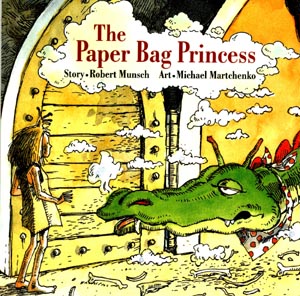
The Paper Bag Princess

The Paper Bag Princess

APA Citation:  Munsch, R. (1992). The Paper Bag Princess. Toronto, ON: Annick Press.

Genre: Fiction

Format: Picture Book

This week, I discussed Verbs with my 4th grade students and why they are important to writing.  We discussed how every sentence has a verb and how writing would be boring if their were no verbs, because there would be no action.  I decided to have my students act out a story while by listening to the verbs while I read a book aloud.  I designated my characters for my book and they acted as I read The Paper Bag Princess by Robert Munsch.

The Paper Bag Princess tells the story of Princess Elizabeth who is madly in love with Prince Ronald.  I mean, Prince Ronald is practically perfect, who wouldn’t be in love with him?  However, before the two can have their fairytale wedding, a horrible dragon shows up destroys the village, kidnaps Ronald, and burns up Elizabeth’s wardrobe.  Have no other option, Elizabeth dons a paper bag and sets off to find her love.  She follows the dragon and eventually catches up to him, she using her wits, and instead of fighting the dragon, she challenges the dragon to burn forests with fire and to fly around the world.  The dragon willingly participates in these activities and eventually wears himself out.  When the dragon falls asleep, Elizabeth makes her grand rescue of Ronald.  Unfortunately, it turns out that Ronald is shallow and vapid and does appreciate Elizabeth saving him because she did it while wearing a paper bag.  Ronald tells Elizabeth to come back when she looks more like a princess and Elizabeth decides she will never come back at all.  The book ends with Elizabeth walking off into the sunset to live her own life.

I feel like this is a good story for gifted children because it reminds them to be true to themselves and not concentrate on how others perceive them.  If they cannot see the true beauty within, then  you are better off living your life without them.  I like that this book teaches an age old lesson in a very entertaining way.

Posted 720 weeks ago

From the Mixed-Up Files of Mrs. Basil E. Frankweiler

From the Mixed Up Files

APA Citation:  Konigsburg, E. L. (1967). From the Mixed-Up Files of Mrs. Basil E. Frankweiler. New York, NY: Aladdin Paperbacks.

Genre: Mystery

Format: Chapter Book

For my novel this week, I chose to read From the Mixed-Up Files of Mrs. Basil E. Frankweiler.  I remembered it as one of my favorite books that I read during my school career.  When I was browsing through books with gifted main characters I ran across this title and decided to revisit the novel.  It was every bit as wonderful as I remembered.

The book tells the story of Claudia Kincaid and her younger brother.  It opens with Claudia and her brother running away to the Modern Museum of Art in New York.  The two make the museum their home and soon find themselves entangled in a mystery involving Michelangelo.  

Claudia is the gifted character in the novel, she carefully developed the plan to runaway and invited her brother because she knew that he had a lot of money in savings and that she needed him to foot the bill.  She spends a lot of the novel wanting to correct her brother’s grammar however, she fights the urge knowing that if she upsets him he will immediately ruin all of her well thought out plans.  Claudia also spends much of the novel trying to fit in and desperately trying to find and come to terms with her identity.  I feel that many gifted elementary students, especially females, can connect to this character and learn from her successes and failures.  

Posted 721 weeks ago

The Man Who Walked Between Two Towers

APA Citation:  Gerstein, M. (2003). The Man Who Walked Between the Towers. New Millford, CT: Roaring Brook Press. 

Genre: Nonfiction

Format: Picture Book

While this book does not include a gifted main character, I did share this book with my gifted students to commemorate 9/11 this past week.  The Man Who Walked Between the Towers tales the story of Philippe Petit, a man who walked between theTwin Towers on a tight rope.   After reading the book, the kids wanted to know if it was a true story or not so, we looked it up online.  They mesmerized by Petit’s feat and we discussed how you can truly accomplish anything if you set your mind to it and believe in yourself.

We also research the Twin Towers and their importance before and after 9/11.  To conclude the lesson, my students wrote an Important Poem, using their words to trace the silhouette of the Twin Towers.

Overall, the project and the book The Man Who Walked Between the Towers was greatly enjoyed by my gifted students.

The Man Who Walked Between the Towers

Posted 721 weeks ago

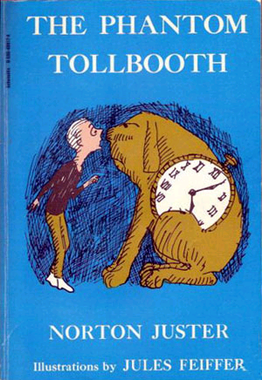
The Phantom Tollbooth

APA Citation:  Juster, N. (1961). The Phantom Tollbooth. New York : Epstein & Carroll.

Genre:  Fantasy
             Juvenile Fiction 

Format:  Chapter Book

I can’t  honestly say that I actively chose this book for my first reading.  We were actually pushed together by circumstance.  I was looking for a novel to use with my gifted 5th grade students and unfortunately, as a new teacher, I do not have an extensive classroom library; which means I am limited to the class set of books that have been bequeathed to me by my predecessors.  As I was looking at my very sad bookcases, I noticed the book The Phantom Tollbooth by Norton Juster.  Not knowing much about the book, I googled it to find that it is a highly acclaimed children’s book and is a good read for gifted students. I was sold.

When you open the book to the first page, you are immediately introduced to the main character, Milo.  Milo is a little boy who finds everything in life, especially school, very uninteresting.  He is lamenting about his boring life when he receives a magical tollbooth from an anonymous friend.  Milo drive his toy car through the tollbooth and embarks on a magical journey that teaches him a very important lesson.  Through his travels, Milo learns that school is very important.  He realizes,

“It’s not just learning things that’s important. It’s learning what to do with what you learn and learning why you learn things at all that matters.

This is an excellent book for gifted students to read because often times they are bored in classrooms and feel like school is a waste of time.  This book helps them to realize why school and learning is important to their future and that imagination, insight, education, and wisdom can take them anywhere and help them accomplish anything in their lives.  The book also uses a lot of wordplay that makes it entertaining for adults.  Overall, it was an excellent choice for my students and though they have not finished reading the novel, they do seem to be really enjoying it.


Posted 723 weeks ago

You Are Not Alone

This summer I spent most of my time taking classes for my masters degree and Academically Intellectually Gifted Certification.  While feverishly attempting to read through a stack of books that can only be rivaled by the stacks in the Library of Congress, I ran across a very interesting word, “bibliotherapy.”  

Bibliotherapy is the process of having a student read a book to learn about social/emotional issues or developmental needs by identifying with a character in the book.  Having once been a gifted student myself and now witnessing my gifted teenage brother navigate the dangerous jungle that is referred to as high school, I realize that there is a great need for gifted students to form an understanding that they are not alone and that many others have traveled (and survived) the very same path they are traveling now.  Sure, you could attempt to tell them that the world is not ending and that they are not the lone vessel of right in a sea of wrong, but you will likely be on the receiving end of a set of an indignant scoff or the ever popular eye rolling that most teenagers have perfected by the age of thirteen.  After all, no one over the age of 18 has a CLUE what life is like. It is obvious that teenagers believe that our geriatric brains have forgotten everything that we may have once known and, because dinosaurs still lived when we were teenagers, our day-to-day existence can in no way be equitable to the life of a teenager today. 

So, perhaps, if we can’t simply talk to a teenager or a child, maybe, just maybe, we can reach them through a literary character.  With that being said, for my Book-a-Day challenge, I am going to attempt to compile a list of books that have a gifted main character and could be used in a gifted classroom as a form of bibliotherapy. 

Check back here for the completed collection. 

Posted 723 weeks ago

This free website was made using Yola.

No HTML skills required. Build your website in minutes.

Go to www.yola.com and sign up today!

Make a free website with Yola